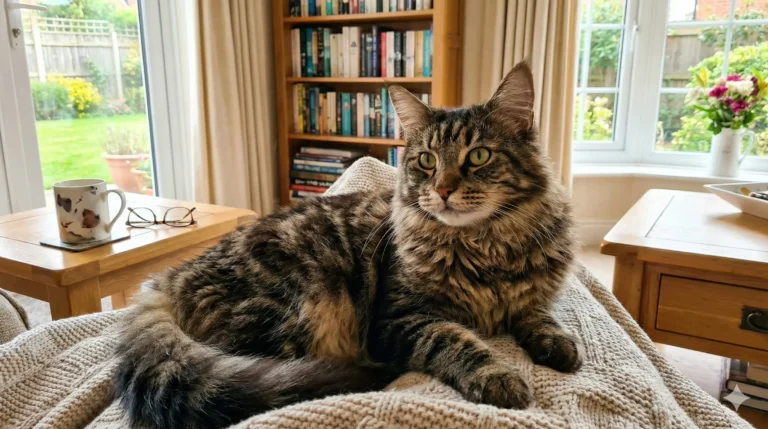

Every spring, my Maine Coon, Stings, starts leaving little “fluff clouds” wherever she naps on the couch, my black jeans, even my coffee mug if I’m not careful. The first time it happened, I panicked, convinced she was losing her coat. But my vet just smiled and said, “She’s not shedding she’s changing clothes for the season.”
That’s when I realized Maine Coons don’t just shed they transform. Their luxurious double coat, built to survive harsh winters, naturally lightens up for summer. Come cooler months, it thickens again, like nature’s built-in wardrobe change. The process is fascinating and a little messy but once you understand it, you can manage it with ease.
In this guide, we’ll walk through everything you need to know about Maine Coon shedding seasons: when it happens, why it’s essential for their health, and how to keep your home (and your sanity) fur-free. Along the way, I’ll share practical grooming routines, diet tips that support coat health, and little rituals that turn brushing into a bonding moment because shedding season doesn’t have to feel like a battle. It can actually bring you closer.
Understanding the Maine Coon’s Seasonal Coat Cycle
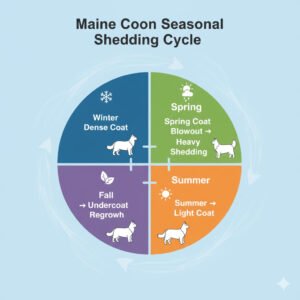
When temperatures shift and daylight hours change, their bodies get the signal time to switch wardrobes. During spring and early summer, that thick undercoat begins to loosen and shed. You’ll notice tufts around your home, more frequent grooming sessions, and maybe even a few extra hairballs. It’s not hair loss; it’s renewal.
Then, as autumn rolls in, your Maine Coon starts preparing again this time adding insulation for winter. Their coat grows denser, the ruff around their neck thickens like a lion’s mane, and even their tail fur expands, creating that dramatic plume we all adore.
This natural rhythm isn’t just about temperature; it’s part of how your cat regulates health and comfort. Proper brushing during these transitions helps remove dead fur before it mats, allowing new hair to grow evenly. Think of it like helping your Maine Coon press the “reset” button on their coat. A lot of owners find that shedding season gets much easier once they focus on socializing a Maine Coon kitten for grooming, because a relaxed, confident cat tolerates brushing far better.
When I first learned this, I started tracking Sting’s shedding like seasons on a calendar. By March, I’d set out her favorite grooming mat, stock up on lint rollers, and cue up a soft playlist grooming became our quiet weekend ritual. Now, instead of dreading shedding season, I see it as our signal that another cozy chapter is beginning.
When Does Maine Coon Shedding Season Start
Maine Coons usually begin their big shedding season in spring, right around the time daylight starts stretching past twelve hours. Their bodies don’t read calendars, they read light. Longer days trigger a biological signal: it’s time to shed the heavy winter coat and make room for the sleek, breathable summer version.
For most cats, the heaviest shedding happens between March and June, depending on your local climate and how much time your Maine Coon spends near windows or in natural light. Indoor cats who live under steady artificial lighting often shed lightly all year round, while those who get sun exposure will follow a more distinct seasonal rhythm.
Then, around September or October, the process reverses. You’ll notice that soft, woolly undercoat coming back in as they start prepping for cooler weather. This fall shedding season is usually lighter and shorter more like a wardrobe refresh than a full outfit change.
Some cats shed for just a few weeks; others take up to two months to fully transition. And just like humans, every Maine Coon’s coat has its own personality. My boy, Thor, finishes his spring shed in record time two weeks of fluff and it’s done. But Luna? She takes her sweet time, dropping soft clouds of fur for almost six weeks while purring through every brushing session.
If you start noticing extra tufts around the house or fine hairs floating through the sunlight, don’t panic it’s nature doing its job. What matters most during these shedding windows is support, not stress. Gentle brushing, balanced nutrition, and hydration all help the coat renew itself beautifully.
Signs of Healthy vs. Excessive Shedding
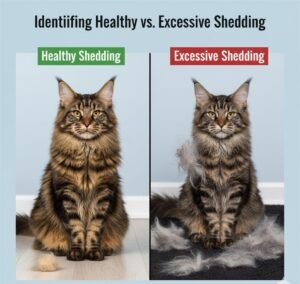
Every Maine Coon owner knows the sight: gentle tufts floating across the living room floor, collecting under chairs like tiny snowdrifts. It’s part of the charm and the challenge of living with this magnificent breed. But how much shedding is normal? And when should you start worrying?
What’s Normal Shedding?
A healthy Maine Coon’s coat goes through regular, predictable transitions. You’ll notice a moderate shed in spring (as the heavy winter coat loosens) and a lighter one in fall (when the undercoat thickens again). During these times, you’ll find soft clumps around favorite napping spots or when brushing their ruff and belly.
The fur itself should still look lustrous, even, and full that’s your biggest sign of normal, healthy turnover.
Small seasonal tufts = ✅ normal
Constant bald patches or thinning = not normal
Signs of Excessive Shedding or Hair Loss
When shedding starts to look patchy or feels different to the touch, your cat might be sending signals that something’s off. Watch for:
- Bald spots or uneven coat texture (especially along the spine or legs)
- Dull, greasy, or flaky fur that’s lost its usual shine
- Persistent scratching, licking, or chewing areas of the coat
- Fine dandruff or dry skin visible under bright light
Sometimes, it’s just stress or humidity. But persistent symptoms often point to deeper issues—like allergies, diet imbalances, or parasites.
Health Issues That Can Cause Abnormal Shedding
Maine Coons can develop coat issues if something disrupts their internal balance. Common culprits include:
- Poor diet: low protein or lack of omega-3s can weaken follicles
- Parasites: fleas or mites can trigger over-grooming and patchiness
- Stress: changes in environment, noise, or routine may cause self-grooming
- Thyroid or hormonal imbalance: more frequent in older cats
If you ever notice shedding paired with appetite loss or fatigue, it’s best to schedule a vet visit to rule out underlying problems.
You might like: Common Maine Coon Health Issues , where we dive deeper into conditions like skin irritation, allergies, and hormonal shedding.
Grooming Tips to Reduce Shedding
The truth is you can’t stop a Maine Coon from shedding. But you can guide the process so it happens on your brush, not your sofa.
1. Create a Consistent Brushing Routine
During regular months, once or twice a week is plenty, but when shedding season hits (spring and fall), go daily for best results. Use a soft slicker brush or an undercoat rake to reach the dense layers beneath the mane. Be gentle, especially around the belly and underarm,s where the fur tangles easily.
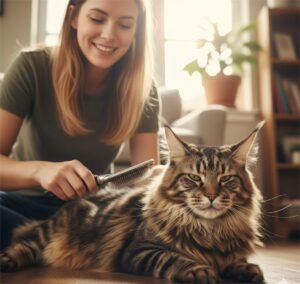
My experience:
“Ever since I turned Sunday mornings into brushing time, my lint roller’s been on vacation. Now Leo flops on his side the moment he sees the brush it’s become our weekend ritual.”
2. Best Brushes and Tools for Maine Coon Shedding
- Slicker Brush: loosens surface fur without scratching skin
- Undercoat Rake: ideal for dense, plush coats
- Grooming Gloves: great for skittish cats who dislike brushes
- Deshedding Tool: use sparingly during coat blowout periods

You don’t need to go fancy, just choose tools that mimic the cat’s natural grooming motion.
3. Support Shedding with Seasonal Grooming Care
During heavy shedding, consider a cat-safe deshedding spray or a gentle moisturizing shampoo once a month to remove dead fur and maintain coat oils. Avoid overbathing it can strip the coat and cause dryness.
If you notice tangles forming around the ruff or tail, mist lightly with detangler and use slow, downward strokes. Patience beats pulling every time.
You might like: Maine Coon Grooming Guide , your complete tool and technique breakdown for at-home maintenance.
Nutrition and Supplements for a Healthy Coat
A glossy Maine Coon coat isn’t just a matter of good grooming it starts from the inside out. The condition of your cat’s fur reflects what’s going on beneath the surface: their diet, hydration, and overall health. If you’ve ever noticed that your Maine Coon’s coat looks a bit dull or they’re shedding more than usual, their nutrition might be the missing piece.
High-Protein Diets
Maine Coons are large, muscular cats with dense fur, and they need animal-based protein to maintain both. A diet rich in chicken, turkey, salmon, or beef supports fur regeneration and reduces excessive shedding.
When protein levels drop, or the diet relies too much on plant fillers, you’ll often see the coat lose its silky texture and start to shed unevenly.
2. Omega-3 and Omega-6 Fatty Acids: Shine + Shedding Control
If there’s a “magic ingredient” for Maine Coon coat care, this is it.
Omega-3 and Omega-6 fatty acids nourish the skin, strengthen follicles, and give that signature shimmer to your cat’s fur.
Foods rich in these nutrients include:
- Salmon oil or fish oil supplements (rich in DHA & EPA)
- Flaxseed oil (a plant-based alternative)
- Sardines or mackerel (in moderation)
A few drops of wild salmon oil mixed into their daily meal can make a visible difference within weeks less dandruff, softer fur, and smoother shedding transitions.
3. Hydration
A hydrated cat is a silky-coated cat. Maine Coons, especially indoor ones, often don’t drink enough water, and dry skin leads to more flakes and fur fallout.
Encourage hydration by:
- Offering wet food (it’s ~70% moisture)
- Using a cat water fountain (flowing water attracts them)
- Mixing a splash of water or bone broth into their kibble
This simple step can help reduce dry shedding and dandruff dramatically.
4. Essential Micronutrients: The Small Things That Matter
Beyond protein and fats, your Maine Coon’s coat thrives on trace nutrients that support keratin and pigment production:
- Zinc & Biotin: for fur strength and shine
- Vitamin E: protects skin cells from dryness
- Taurine: an amino acid crucial for hair follicle health
If you’re feeding a balanced premium diet, these are likely covered, but some owners add a multivitamin supplement if their cat is on a limited or homemade meal plan.
5. Recognizing Diet-Related Shedding
If your Maine Coon’s shedding feels constant or their fur looks dull no matter how often you brush, it may be a dietary signal. Signs include:
- Greasy or brittle fur despite grooming
- Visible dandruff or skin flakes
- Increased shedding between seasons
- Dull or faded coat color
A quick switch to a protein-rich, omega-supplemented diet often brings visible improvement in 4–6 weeks.
You might like: Maine Coon Feeding Chart, a full nutrition breakdown by age, weight, and activity level.
Managing Shedding Around the Home
Let’s be honest, no matter how much you brush, your Maine Coon will still leave little tufts of love around your house. Their fur has a magical ability to travel, one minute it’s on the sofa, the next it’s on your toast. But managing the fluff isn’t about fighting it it’s about learning smart routines that make cleaning easier and your cat more comfortable.
1. Choose Fur-Friendly Fabrics
Some materials practically invite fur to cling, while others quietly repel it. If you share your home with a Maine Coon, think about fabrics strategically:
- Avoid: velvet, corduroy, fleece, and dark cotton upholstery (they’re fur magnets).
- Embrace: leather, tightly woven linen, or microfiber that lets you wipe fur away easily.
Many owners swear by washable couch covers or cozy throws that can be shaken outside or tossed in the laundry once a week. It’s a small change that keeps your living space (and sanity) intact.
2. Your Anti-Fur Toolkit: Tools That Actually Work
Forget the endless brushing alone, these small tools help you stay ahead of shedding season:
- Lint rollers: Fast and satisfying for quick touch-ups before guests arrive.
- Pet vacuums: Lightweight vacuums with HEPA filters pull fur from carpets and cushions.
- Air purifiers: Especially helpful for allergy-prone owners, they catch floating dander.
- Rubber grooming gloves: Great for sofa cleanup and bonding moments with your cat.
For extra control, try keeping a designated “grooming zone” (like a mat or towel) to catch loose hair during brushing. You’ll be shocked at how much stays in one place.
3. Make Clean-Up Part of the Routine
A little consistency goes a long way.
Here’s a realistic schedule many Maine Coon owners swear by:
- Daily: Quick lint roll on clothes or bedding.
- Weekly: Vacuum favorite cat spots and brush during high-shed seasons.
- Monthly: Wash throws, pillow covers, and cat bedding.
The secret? Don’t think of it as “cleaning up after your cat” think of it as living in rhythm with your Maine Coon’s natural cycle. My secret hack is to add a pet-specific laundry rinse (like white vinegar or enzyme-based cleaners) to remove fur more easily from fabrics.
4. Contain, Don’t Complain
The simple truth is that you can’t stop the fluff you can only contain it. The goal isn’t a fur-free home (that’s impossible with a Maine Coon), but a fur-managed one. So instead of obsessing over every stray hair, celebrate it as part of their charm. A well-kept environment keeps everyone, cats, happier and healthier.
Mini story wrap:
“The day I stopped trying to ‘beat the shedding’ and started working with it weekly brushing, washable throws, good vacuum my house got cleaner, and Leo got calmer. Turns out, managing fur was just another way to love him better.”
You might like: → Maine Coon Grooming Guide (for brushing tools and coat-care essentials)
Maine Coon Shedding & Home Management Toolkit
| Tool / Product | Purpose | How Often to Use |
|---|---|---|
| Slicker Brush or Undercoat Rake | Removes loose undercoat, prevents matting | 2–3x weekly (daily during spring/fall) |
| Grooming Gloves | Light surface hair removal, great for bonding | Anytime quick daily sessions |
| Lint Roller / Sticky Brush | Removes fur from clothing and furniture | Daily or as needed |
| Pet Vacuum (HEPA Filter) | Deep clean carpets, couches, and corners | 1–2x weekly |
| Air Purifier (with HEPA Filter) | Reduces floating fur and dander | Run daily in main living areas |
| Washable Throws or Couch Covers | Protects furniture from shedding buildup | Wash weekly |
| Cat-Safe Deshedding Shampoo | Helps loosen excess fur and reduces tangles | Once every 4–6 weeks |
| Omega-3 Supplement | Supports skin moisture and healthy coat | Daily with meals |
When to See a Vet About Shedding
Even with the best grooming habits, there are times when shedding stops being “seasonal fluff” and starts signaling something more. The key is knowing what’s normal for your Maine Coon, and what’s not.
You’ll always find a little fur on your couch or hoodie; that’s part of living with this glorious breed. But if you start noticing sudden thinning patches, persistent dandruff, or your cat licking one spot over and over, it’s time to pause and look deeper.
Excessive or uneven shedding can point to several issues:
- Skin irritation or allergies – often caused by new foods, detergents, or even flea bites.
- Parasites or fungal infections – ringworm and mites can cause small circular bald spots.
- Nutrient deficiencies – a dull, brittle coat may mean your cat isn’t getting enough protein, taurine, or omega-3s.
- Stress or anxiety – moves, new pets, or loud environments can trigger over-grooming.
- Hormonal or thyroid changes – more common in older Maine Coons, sometimes linked to weight or energy shifts.
If you have the time, I always recommend that you keep a simple “coat diary.” Write down the date, what you notice (like extra shedding or dandruff), and any recent diet or environmental changes. Vets love details, and you’ll start spotting patterns faster than you’d expect.
If your Maine Coon’s shedding comes with scabs, skin odor, lethargy, or appetite loss, don’t wait for it to pass. Book a vet visit. Early detection of allergies or heart-related stress (which can also affect coat quality) can make all the difference in their comfort and their lifespan.
“Trust your gut,” as one vet told me. “You live with them. You’ll always notice before anyone else when something feels off.”
FAQ
Do Maine Coons shed a lot?
Yes, but it’s all part of their natural rhythm. Maine Coons have a double coat designed for insulation, which means they shed their undercoat heavily in spring and fall. Daily brushing during these times helps keep the fur tumbleweeds under control and prevents tangles before they start.
How can I reduce my Maine Coon’s shedding?
You can’t stop shedding completely, but you can manage it. Brush your cat several times a week (daily in spring and fall), feed a diet rich in omega-3 fatty acids for skin health, and bathe gently every few months with a cat-safe deshedding shampoo. Also, make grooming fun think treats, praise, and calm energy.
When do Maine Coons shed their winter coat?
Most Maine Coons start losing their thick winter coat in early spring, around March or April, when daylight increases. This “coat blowout” can last a few weeks as their bodies adapt to warmer weather. Expect another, smaller shed in the fall as they grow their winter layer back in.
Why is my Maine Coon shedding in clumps?
Clumpy or uneven shedding often means mats or skin dryness are developing. It might also indicate poor diet or stress. Check for dandruff, itching, or sore spots, and make sure your brushing reaches the undercoat not just the surface fur. If the clumps persist or bald patches appear, see your vet.
What diet helps reduce shedding?
A high-protein, grain-free diet with fish oil, taurine, and zinc keeps your Maine Coon’s coat glossy and less likely to shed excessively. Wet food can also help with hydration, which keeps the skin supple. Avoid low-quality fillers that can cause dryness or dullness.
Is shedding different for indoor vs. outdoor Maine Coons?
Yes. Outdoor cats shed more seasonally in tune with daylight changes, while indoor Maine Coons often shed lightly year-round because of consistent temperature and artificial lighting. Either way, regular grooming is the great equalizer it keeps both coat and skin in balance.
Final Thoughts
Living with a Maine Coon means embracing a little fur, and a lot of personality. Their seasonal shedding isn’t a flaw; it’s a rhythm of nature that mirrors their wild, northern heritage. The extra brushing, the gentle grooming sessions, even the fluff on your couch they’re all part of the bond you build.
Each brushing moment is more than coat care; it’s a form of connection. Your Maine Coon learns your touch, your tone, your patience. In return, you get that slow blink of trust, the soft trill of approval, and a coat that gleams with health.
So, instead of fighting the fluff, lean into it. Equip yourself with the right tools, keep a consistent grooming routine, and appreciate how resilient and magnificent these cats truly are. Shedding is temporary, but the love, companionship, and calm presence of your Maine Coon last far beyond any season.
Hi, I’m Rob Archer. I’m deeply passionate about helping cats find loving homes and giving people the tools to make rescue and adoption easier. Every article I write is driven by a love for animals and a belief that every cat deserves responsible, long-term care. Learn more about Rob Archer.